
Thank you for Subscribing to Insurance Business Review Weekly Brief

EMCOR Group, Inc [NYSE: EME]
Kimberly Clifford, Director, Claims Management, EMCOR Group
A Leader's Journey to Transforming Claims with Purpose
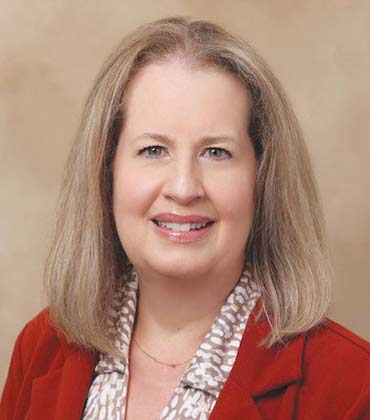
Kimberly Clifford
Kimberly Clifford serves as Director of Claims Management at EMCOR Group, Inc., bringing over 25 years of deep expertise in complex claims handling, litigation strategy and global insurance operations. She began her career as a paralegal, drawn by a passion for justice, before transitioning into claims adjusting, earning her license and building experience from the ground up. Rising through the ranks, she ultimately managed high-value policy limit claims and led teams at a national insurer. A desire for broader impact led her to BIC, where she gained critical exposure to international claims practices. After BIC, she began her role with EMCOR, a Fortune 300 company generating over $15 billion in revenue. In her current role, she combines strategic thinking with a people-first mindset to drive claims excellence.
Recognizing Kimberly Clifford’s role in advancing global claims leadership, this exclusive feature explores her commitment to operational integrity and forward-looking risk management.
Evolving Dynamics in Claims
When I think about claims handling, it’s of course rooted in data, you need information to understand the facts, assess liability and make informed decisions. But it’s just as much about people and process. As a director, I focus on cultivating a culture grounded in transparency, empathy and open communication. These values are essential.
Success in claims management depends not just on following data or process, but on balancing both with the human element that gives claims meaning. Moving a claim forward requires structure, but also compassion. It’s a delicate balance, prioritizing performance without losing sight of the people affected by each decision.
Data governs much of what we do, but our role isn’t to crunch numbers. It’s to use key information as a strategic guide, one that helps claims professionals make thoughtful, actionable choices. At the same time, we must remember we’re humans working with other humans, often in moments of real distress.
Empathy and understanding are helpful and they’re vital. They drive better outcomes and ensure every party feels respected and heard. That, to me, is what claims management is really about.
Success in claims management depends not just on following data or process, but on balancing both with the human element that gives claims meaning.
Building a Values-Based Claims Strategy
There are a million things that run through my mind when I think about claims, especially on a catastrophic level. Some are straightforward, but more often they involve complex, moving parts. In those moments, it’s critical not to lose sight of the core responsibilities in handling a claim with care and accuracy.
Communication becomes everything, making sure all parties are informed, treated with professionalism and fully understand what’s happening. Even when we’re on opposite sides, I believe in working collaboratively to reach common ground. That’s what helps people move forward, resolve what happened and begin to put it behind them.
Every difficult event, as hard as it may be, is also an opportunity to learn. That mindset matters. Taking lessons from tragedy helps improve not only future outcomes but also how we connect with those impacted. This is the approach I try to bring to every situation, no matter how challenging.
Guidance for the Next Generation
I believe everyone needs to recognize that they are a small piece of a much bigger puzzle. Every role matters and every person contributes to the broader picture. That’s why it’s so important for people to clearly understand operational objectives, what we’re trying to achieve and the outcomes we’re aiming for. Without that clarity, it’s easy to lose focus or alignment.
At the same time, I believe that building authentic relationships based on trust and collaboration is essential. It influences everything we do. Claims are not just about data or process. It’s about human connection, engagement and the integrity to always do what’s right, even when no one’s watching. This kind of character drives the right outcomes.
Fairness and objectivity are critical in this work. But they mean little without the integrity to stand by those values in tough moments. I’ve always found that people who demonstrate integrity and lead by example are the ones who inspire others to grow, learn and collaborate.
When individuals come together with that mindset, we’re better able to reach collective goals and move the organizational mission forward. That shared purpose is what keeps everything in sync. At the end of the day, we’re all playing our part to complete the bigger picture and that’s what makes it meaningful.
The articles from these contributors are based on their personal expertise and viewpoints, and do not necessarily reflect the opinions of their employers or affiliated organizations.
