
Thank you for Subscribing to Insurance Business Review Weekly Brief

Insurance Business Review: Specials Magazine
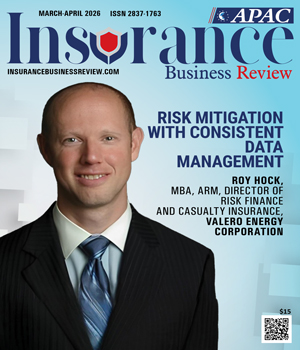
Roy Hock is the Director of Risk Finance and Casualty Insurance at Valero Energy Corporation. He earned a Master of Business Administration from the University of Texas at San Antonio, a Bachelor of Science from Texas A&M University and holds an Associate in Risk Management (ARM) designation. He joined Valero in 2020 and where he provides leadership over Valero’s Casualty Program, Risk Administration & Finance Group, and the company’s insurance captive. Before joining Valero, Roy served as Director of Risk Management at TETRA Technologies, Inc. and Senior Manager of Risk at Pacific Drilling S.A. Roy has also held various roles in account management, underwriting and reinsurance at international brokerage and insurance companies respectively. Referring to the term captive management from a captive owners’ perspective, Roy Hock illustrates its similarities with the needs and goals of the commercial insurance ecosystem, i.e., better control of data to drive better decisions. This article delves into the positives and negatives of implementing and risk management information systems (RMIS) for captive owners to provide an insightful view of RMIS implementation in the captive insurance industry. Risk Management Information Systems and Captive Management In over 25 years of my career, I have built aspects of or fully implemented many RMIS to help the company meet its goals. Truthfully, I was not always successful in the task, with bureaucracy, lack of buy-in and general management misunderstanding of how a good system works being some serious stumbling blocks. However, we got it right, and yes, it is a “we” because you can never implement a good system without a lot of help. It was not until recently that I turned this system-focused approach to the world of captive management. ... Read More
Claims Processing and Management Services
Storm Support Services
A Trusted Partner For Reliable Claims Management
Max Sollmer, General Manager
Queensland’s natural wonders define its identity, but its residents know all too well that living in this region comes with seasonal challenges like hailstorms. These events test the resilience of homeowners and communities as they rally to restore and rebuild. For many property owners, however, the most daunting task isn’t physical repairs but navigating the complexities of insurance claims, where resilience takes a different form. Storm Support Services—an independent intermediary and end-to-end claims management firm—offers a lifeline in these moments. It provides free damage inspections, takes charge of the entire claims process on the property owner’s behalf and connects them to licensed, vetted builders across Queensland to carry out repairs. “We focus on recent cases, generally within the last year, but we can backdate claims if necessary. From there, we manage the claim entirely and even cover the client’s excess up to a certain amount, allowing property owners to focus on recovery rather than unexpected expenses,” says Max Sollmer, general manager. This commitment to client-centricity, combined with over a decade of expertise in insurance product disclosure statements, Insurance Council of Australia guidelines and relevant legislation, has made Storm Support Services the go-to partner for Queenslanders recovering from storm impacts. A Helping Hand When You Need It Most Hailstorms hit hard, but insurance red tape hits harder. Once the skies clear, claims for hail damage are often denied, with insurers frequently citing insufficient evidence or disputing that the damage doesn’t meet their criteria. This issue has become increasingly common, especially during quieter storm seasons with fewer major hail events. ... Read More

Digital Insurance Software solutions Providers

APAC’s insurance industry is infamous for lagging in the adoption of the latest and cutting-edge technologies. Plagued with stringent regulations and archaic systems, the insurance sector has been bogged down for a long time, witnessing negligible technological progress in the past decade. According to Dale Smith, CEO of JAVLN, technological advancements in the industry could be leaps and bounds. “Insurance is ready for disruptions by modern software and modern vendors,” Smith continues. His company, JAVLN, is well-known for its intelligent cloud-based insurance software that is specifically developed for insurance businesses, underwriting agencies, and brokerages. The data-integration software delivers unique end-to-end policy administration systems that enable members of the insurance domain to seamlessly leverage technology, breaking the cycle of hindered technological progress. With a mission to transform business by utilizing contemporary technology and giving businesses back their valuable time, JAVLN has developed a cloud based SaaS that offers immediate, effortless, global, one-click, 24/7 access, contextualized, and personalized customer experience. JAVLN’s team is committed to accelerating the business growth and operational efficiencies of its clients, by delivering a remarkable level of service that exceeds customer expectations. Home to a team of seasoned software developers and financial professionals, the company is a trusted and responsible partner to its clients, who immensely benefit from its innovative insurance software. JAVLN’s namesake software enables increased business efficiency, profitability, and customer experience, providing users with the time required to focus on quintessential processes. JAVLN’s multi-quote and bind capabilities render a standardized and efficient manner to obtain quotes from various insurers and produce comparison documents for clients' consideration, all within the software. Multifarious question sets from multiple insurers can be seamlessly managed within JAVLN, without the need for entering the data multiple times. ... Read More
Claims Management For Property Owners
“Life is what happens to us while we are making other plans.” This quote by Allen Saunders encapsulates the plethora of unanticipated uncertainties that loom big in people’s lives. When we consider the dangers that may befall us in today’s world, we realize how vital the insurance sector is. Against the backdrop of the global pandemic and volatile economy, insurance businesses are readily harnessing the benefits of InsurTech. The continuous evolution of the InsurTech sector is marked by the entry of new players with cutting-edge technology in the insurance market. Further, the commercial application of tech has not only created umpteen opportunities but also rendered solutions to friction and pain points in the customer experience. This is where Proclaim, a claim management specialist company, comes into the picture with a progressive model coupled with claim analytics solutions. Based in Melbourne, Australia, the company outsources claim management services across all lines of general commercial insurance to two main classes of clients – first, self insured larger companies like Property Trusts and large retailers (corporate), and insurance companies and their underwriting agents (insurance). Proclaim pulls unstructured data into a coherent package by leveraging data analytics, enabling clients to interrogate their claim portfolio performance. The data analytics can also reveal the claims profile to the insured and collect a wide range of information to assure a better understanding of the risk, including types of damage or injuries experienced causes and locations by state. Proclaim uses Microsoft Power BI to provide clients with superior insights into their claim and risk portfolio through data visualization. ... Read More

CXO INSIGHTS

Claim: The Moment of Truth for Insurance Services
Budi Harto, Deputy Director, PT Asuransi Central Asia, Jakarta - Indonesia

How AI and Community Support Shape the Future of Claims Management
Luke Gallagher, Executive General Manager, Direct Claims, IAG

The Evolving Landscape of Travel Insurance
Rhonda Abedsalam, Vice President of Travel Insurance, AXA

Redefining Tax Operations for Investment Managers through Digital Intelligence
Julia Bricker, CPA, CA, Chief Commercial and Product Officer, WTax

Navigating the Ongoing Innovation in the Insurance Industry
Shawn Lau, Digital Transformation & Innovation Principal, DLI Asia Pacific Pte. Ltd [TYO: 8750]

Investment Value Chain in the World of Insurance
Alex Chin, Chief Investment Officer, Generali Malaysia

Digital Transformation in Insurance Sector As Streamline Response to Post-Covid Situation
Gilbert Naibaho, COO, LippoInsurance


IN FOCUS

Workers' Compensation in APAC: Protecting Employees and Businesses Alike
Workers' compensation insurance provides financial support for injured employees and protects employers from legal liabilities while promoting workplace safety and ensuring business continuity.
Strategic Risk Management: Enhancing Insurance Practices in APAC Markets
Insurance risk management in APAC reduces financial exposure, strengthens resilience, ensures compliance, supports decisions, and enables sustainable business growth.
EDITORIAL
Modern Risk, Modern Response
There was a time when the insurance industry in the United States ran on tradition. Policies were buried in paperwork, claims moved at a slow pace, and customer relationships were defined more by legal contracts than personal connection. It was a system built for stability, and for decades, it worked.
However, the world changed, and so did the risks people faced. The industry began to shift. What was once a structure rooted in routine is now being transformed to deliver speed, insight, and agility.
Today’s insurance providers are reimagining how they operate. From underwriting to claims management, digital transformation is reshaping the way risks are evaluated, coverage is personalized, and customers are served. Tools like artificial intelligence, automation, and real-time data are turning long-standing challenges into opportunities to improve clarity and build trust.
This change reflects a deeper need to address the complexity of modern risk. Cyberattacks, climate events, gig economy exposures, and intangible assets like digital content or brand reputation have created new demands. Traditional, one-size-fits-all policies no longer offer enough protection. In response, insurers are moving toward customized coverage that fits the pace and unpredictability of today’s business landscape.
Claims, in particular, have become a focal point for innovation. Success now depends on speed and transparency. Leading insurers are using digital tools to make it easier for customers to report claims, receive assessments quickly, and stay informed throughout the process. Even with advanced technology, the goal remains to keep the human element front and center.
The role of insurance is also expanding. It is no longer just about protecting against loss. It is about helping people and businesses grow stronger, stay resilient, and move forward with confidence, even in uncertain times.
In this edition, we spotlight insights from Beth Diamond, Group Chief Claims and Litigation Officer, Beazley, who shares how claims innovation is driving long-term value, and Dewayne Mundell, Head of Litigation & Property Claims, Next Insurance, who discusses serving small businesses with speed, empathy and efficiency.
