

Thank you for Subscribing to Insurance Business Review Weekly Brief


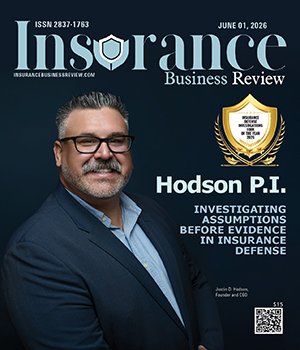
 Justin D. Hodson, Founder and CEO
What risks arise when insurance investigations begin with assumptions rather than verified evidence?
Insurance investigations are not just about evidence. They are about people; the claimants, the clients and the decisions that carry real consequences long after the report is filed.
A lot of investigations begin with an assumption already in place. A claim is assigned, a method is chosen and the work moves forward based on what the client believes needs to be proven. Surveillance is ordered, background checks are initiated, digital searches are launched, often without pausing to ask whether that approach is actually the right one.
When the premise is sound, this works. When it is not, it produces wasted effort, unnecessary cost and, in some cases, conclusions that should never have been pursued.
Hodson P.I. works differently.
As an insurance defense investigation firm, Hodson P.I. evaluates before it pursues. Every case is reviewed not only for what the client has requested, but for whether that request reflects the most effective path to uncovering the truth.
“We’re not out there to provide them with what they want. We’re out there to provide them with what they need,” says Justin D. Hodson, founder and CEO.
We are big enough to investigate any claim, but small enough still to care. Every case is treated as a distinct problem, not something pushed through a standard workflow.
Clients are treated as partners in the process. Effort is directed toward real-world behavior, digital activity and event data, ensuring that what is investigated is genuinely worth investigating.
How does Hodson P.I.’s evaluation-first approach influence investigation direction and outcomes?
Before any report reaches a client, it passes through multiple layers of review, cross-checking and quality control. In claims environments, an unchecked assumption can be more costly than a delayed answer. That’s why the evaluation process regularly changes the direction of a case. What begins as a request for extended surveillance may only require a few days once early indicators are understood. What appears to be a purely digital matter may require physical observation, or a combination of methods, before a complete picture can be formed. In some instances, the most valuable contribution is advising a client not to pursue a particular line of inquiry at all.
Every final report is treated as a defensible product, built with attention to clarity, completeness and evidentiary integrity.
Big Enough to Investigate, Small Enough to Care
Why does maintaining operational discipline matter as investigative firms grow in size and scope?

Scale increases capacity. It does not, by itself, preserve judgment. As investigative firms grow, processes standardize, workloads increase and the connection between care and execution can begin to weaken. Volume becomes the measure. Detail becomes the casualty.
Hodson P.I. has approached growth with that tension in mind.
What began as a two-person, family-owned operation has grown into a multi-state firm of 85 employees, with an established presence across California, Arizona, Colorado and Texas, and a broader national footprint in progress. But the firm's defining characteristic has not been the pace of that growth. It has been what has been preserved through it.
“We are big enough to investigate any claim, but small enough still to care. Every case is treated as a distinct problem, not something pushed through a standard workflow,” says Hodson.
It is the firm’s operating principle. Investigators and case managers are not treated as interchangeable resources to be loaded to capacity. Workloads are deliberately structured, so each assignment receives the attention it requires, allowing the firm to protect both turnaround and judgment as it grows. That philosophy also shapes how client relationships are handled: whether the client is a small business or a large national organization, it approaches the work one relationship at a time, because customers are not treated as numbers or one-off assignments.
-
We’re not out there to provide them with what they want. We’re out there to provide them with what they need.
Hodson P.I. built its foundation in California, one of the most regulated environments for investigative services in the country. The compliance discipline that the environment demanded has translated naturally as the firm expanded into other jurisdictions. The greater challenge now is maintaining culture, not just process, ensuring that each case, regardless of geography, is handled with the same level of scrutiny that defined the firm in its earlier stages.
Making Hidden Evidence Verifiable
In what way do advanced digital techniques strengthen evidence verification in modern investigations?
As investigations increasingly depend on digital evidence, Hodson P.I. has developed capabilities that go well beyond what a standard search can surface.
Photo and video metadata can reveal when and where content was captured. But when that data has been deliberately stripped, the firm’s AI-assisted image analysis identifies environmental markers; terrain, lighting, background context that reconstructs location and circumstance from the image itself. The result is an evidential picture that holds even when someone has taken steps to ensure it wouldn't.
For vehicle accident claims, event data recorder (EDR) extraction pulls the black box data that captures speed, braking and impact timing in the moments before a collision, reconstructing the sequence of events with a precision that witness accounts rarely match.
Across all digital evidence, chain-of-custody protocols are applied as standard: timestamps, IP data, hash codes and metadata checks that confirm the integrity of the source. The objective is not simply to gather information, but to ensure it can withstand scrutiny in claims and legal proceedings.
Proof in Practice
Clients return to Hodson P.I. not because the outcomes are always favorable. They return because the outcomes are always reliable.
 In one case, a claims adjuster was convinced that a claimant was misrepresenting their physical condition and pressed for three weeks of surveillance. Hodson P.I. pushed back. The recommendation was to begin with three days of observation and let the evidence determine what, if anything, came next. Those initial days showed clear and genuine physical restrictions. The extended surveillance was never needed. A potentially prolonged and costly process was resolved early, with a clear and defensible conclusion.
In another, a previous investigation had returned a near-empty report on a claimant’s digital activity. Upon re-examination, Hodson P.I. identified that the individual was operating through a concealed ‘sock puppet’ account, a fake identity, and was, in fact, extensively active online. The resulting analysis produced substantial evidence that directly challenged the claim.
Neither outcome was what the client initially expected. Both were what the client genuinely needed.
“There are times when clients are disappointed. But because we’ve developed strong relationships with them, they understand and appreciate that we are giving them the facts, so they can make the important decisions they need to make,” says Hodson.
The People Who Hold the Standard
Investigators work under pressure that does not always let up. Sustaining that without it affecting outcomes takes more than skill; it has to be built in.
At Hodson P.I., that starts with how people are treated.
Hodson describes his team as ‘our own tribe,’ a term that reflects something more deliberate than company culture. Workloads are structured to keep investigators and case managers focused, not stretched thin, whereas internal accountability systems ensure performance does not quietly erode over time.
And the investment in people extends beyond process: bonus programs, team outings and recognition initiatives reinforce an environment where consistency is expected because it is genuinely supported.
The logic is straightforward. Fatigue affects outcomes. Overloaded investigators cut corners, not always by choice, but by necessity. By managing workload with the same discipline applied to casework, the firm protects the one thing that cannot be recovered once it slips: accuracy.
The Next Phase of Investigative Work
Despite advancements in technology and expansion in scale, the foundation of Hodson P.I.’s approach remains unchanged.
As claims environments become more data-driven, the role of investigation is shifting from reactive validation to early-stage decision support. Firms that can guide which claims require scrutiny and how scrutiny should be applied will define the next phase of insurance defense.
Hodson P.I. is already operating within that shift, applying judgment earlier in the claims process to guide how and where evidence should be pursued. Prioritizing truth over assumption provides clarity in situations where uncertainty can be costly.
Such consistency has not only shaped Hodson P.I.’s role in the insurance defense ecosystem but earned it industry recognition as Insurance Defense Investigations Firm of the Year 2026.
Truth, Precision and Judgment in Insurance Defense Investigations
Insurance carriers and claims leaders operate in an environment where the cost of misjudgment extends beyond financial exposure into regulatory scrutiny and reputational risk. The growing complexity of claims, particularly those involving digital evidence and multi-channel narratives, has elevated the role of investigative partners from tactical support providers to critical inputs in decision-making. The challenge is no longer access to data, but the ability to validate, interpret and present it in a way that withstands scrutiny.
A recurring pressure point lies in distinguishing signal from noise across fragmented evidence sources. Social media activity, surveillance findings, background records and vehicle data often present conflicting narratives. An effective investigative approach must demonstrate discipline in synthesizing these inputs into a coherent, defensible account rather than simply accumulating data. Clarity of narrative becomes as important as the evidence itself, since claims decisions increasingly rely on how convincingly facts are connected and contextualized.
Integrity in findings remains another defining concern. Many claims teams encounter situations where investigative outcomes contradict initial assumptions. A partner that aligns too closely with client expectations risks introducing bias, while one that prioritizes factual accuracy strengthens long-term trust. The ability to present inconvenient findings with clarity and supporting evidence enables executives to act decisively, even when outcomes are not immediately favorable. This discipline ultimately protects both claim integrity and organizational credibility.
Technology has introduced both opportunity and complexity into the investigative process. Advanced tools can extract metadata, analyze imagery and reconstruct events with greater precision than traditional methods. Yet the value of these tools depends on how rigorously evidence is validated and preserved. Decision-makers increasingly expect assurance that digital findings are traceable to sources, supported by verifiable timestamps, location data and audit trails. Without this rigor, even sophisticated analysis can lose credibility in litigation or internal review.
Responsiveness also shapes the effectiveness of investigative support. Claims environments are not bound by standard working hours, and delays in evidence gathering can compromise outcomes. Firms that maintain consistent availability while ensuring investigators are not overextended tend to produce more reliable work. Balanced workloads enable deeper case attention, which translates into more accurate findings and stronger documentation.
Against this backdrop, the most effective investigative partners combine analytical discipline with judgment. They assess each case individually, challenge assumptions when necessary and recommend the most appropriate method rather than defaulting to predefined approaches. This adaptability ensures that resources are directed where they produce the most meaningful insight, whether through surveillance, digital analysis or background investigation.
Hodson P.I. reflects these attributes through a model that prioritizes factual accuracy and disciplined case evaluation. It applies a structured approach to evidence gathering that integrates surveillance, social media analysis and event data retrieval while maintaining strict validation protocols for digital information. Its emphasis on assessing each claim before determining investigative direction allows it to align methods with case realities rather than client assumptions. The firm’s commitment to presenting objective findings, even when they challenge expectations, supports more confident decision-making. Combined with consistent availability and a focus on maintaining manageable case volumes, it delivers investigations that are both thorough and actionable, positioning it as a dependable choice for organizations requiring clarity in complex claims.
...Read more
