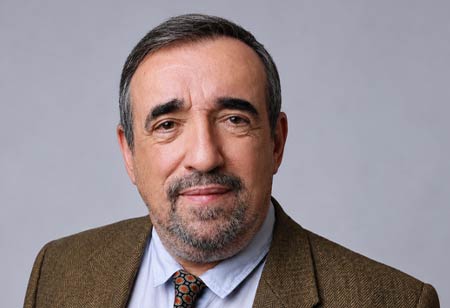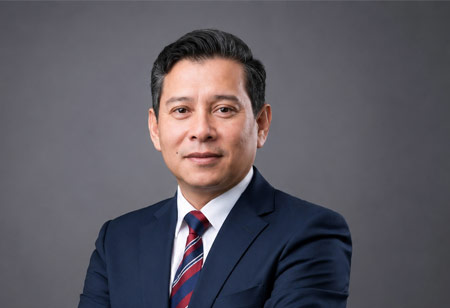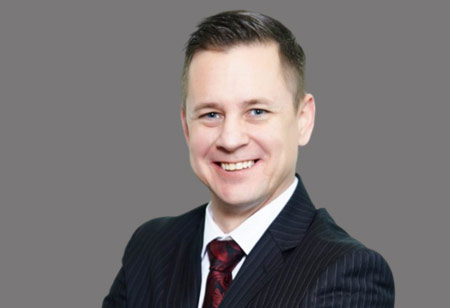


At GARETT, we built the firm around a simple conviction: the most consequential insurance claims, the ones that determine whether a business survives a major loss event or doesn't, require a rare combination of technical depth, financial rigour, contractual mastery, and, critically, genuine proximity to the client. Not proximity as a service promise. Proximity as a structural reality. That is why we operate from Paris, Abidjan, and Kinshasa simultaneously, why our professionals include engineers who have spent decades on industrial sites and financial experts who can deconstruct a business interruption cascade down to its last decimal point.
The claims that matter most are also the hardest to get right
The industry conversation about claims management has been dominated over the last few years by technology: automation, AI-assisted triage, and digital-first notice of loss. All of that matters. But there is a category of claims (complex industrial losses, major infrastructure failures, natural resource incidents, significant business interruption events) where the automation layer simply does not reach. Where you need someone who has actually stood inside a flooded process plant, or who understands the precise contractual language that distinguishes a covered machinery breakdown from an excluded design defect.
These are the claims that, if managed well, rebuild trust between insurer and insured. If managed poorly (delayed, under-quantified, poorly argued), they generate litigation, reputational damage, and sometimes existential financial consequences for both parties. The gap between a well-run complex claim and a poorly run one is not measured in weeks. It is measured in millions, and in relationships that take years to repair.
What we have learned, working across Europe, Africa, and beyond, is that the technical and financial dimensions of a complex claim are inseparable. You cannot accurately quantify business interruption without understanding operations. You cannot defend a claim’s position in arbitration without contractual mastery. And you cannot do either of those things credibly without being trusted by both sides as a rigorous, independent actor. That trust is not declared. It is earned, file by file.
Fraud is not a compliance problem. It is a market integrity problem.
One conversation that does not get enough airtime in claims management circles (especially at the premium end of the market) is fraud. Not the opportunistic kind that consumer lines teams deal with every day, but the sophisticated, layered fraud that targets large industrial and infrastructure claims: inflated loss quantifications, misrepresented cause-of-loss narratives, coordinated documentation schemes involving multiple parties.
At GARETT, we are explicit about our commitment to fighting fraud. Not because it is a regulatory obligation (though it is), but because we understand what fraud costs. Not just to insurers. To the broader market. Every fraudulent claim that passes undetected raises premiums, reduces capacity, and (particularly on emerging markets like those across West Africa) delays the expansion of insurance access to businesses and populations that need it most. Fraud in the large commercial and industrial claims space is not an abstract statistic. It is a direct tax on the development of the markets we care about.
Our investigators bring a cross-disciplinary lens to this work: technical experts who can identify when a "mechanical failure" narrative does not align with the physical evidence; financial analysts who spot when a business interruption claim's revenue baseline has been quietly restated upward; contract specialists who recognise when a policy interpretation is being stretched well beyond its intended scope. That combination (what we call a global approach to claims management) is what allows us to add real value at the instruction of insurers and reinsurers navigating their most sensitive files.
The market in 2026: what is actually changing
Three shifts are reshaping what premium claims management looks like right now, and they are all accelerating simultaneously.
The first is the complexity of the loss landscape itself. The energy transition has created an entirely new generation of insured assets (offshore wind farms, solar installations, battery storage infrastructure, and hydrogen production facilities) that carry risk profiles the industry is still learning to underwrite and, consequently, still learning to adjust when they fail. At GARETT, our Energy and Power practice has worked on renewable energy losses across Africa and Europe over the past few years. The technical specificity required is genuinely different from conventional power generation. Adjusters who lack that background are navigating unfamiliar territory at exactly the moment when precision matters most.
The second shift is geopolitical risk becoming claims risk. Supply chain disruption, political violence, and sanctions-related asset freezes, events that used to sit in the underwriting conversation, are now driving claims instructions at scale. The intersection of political risk, trade credit, and property damage is producing some of the most technically complex files we have seen. Working on these requires expertise that cuts across traditional claims silos.
The third (and perhaps the one with the longest tail) is Africa's emergence as a serious insurance market. The continent's industrial infrastructure buildout, driven by energy investment, mining, civil engineering, and logistics, is generating a new wave of large commercial losses that require sophisticated adjustment. Local expertise matters enormously here: knowledge of CIMA regulations, national legal frameworks, and local market dynamics. But that local expertise must be married to international technical and financial standards. Firms that can credibly deliver both have a significant competitive advantage. It is the positioning we have deliberately built.
The relationship question no one asks enough
Here is something we strongly believe, and it shapes how we operate: the quality of a claim’s instruction is determined before the claim happens.
The insurers and reinsurers who consistently get better outcomes from complex claims are the ones who have taken time to build real relationships with their adjustment partners, relationships based on honest dialogue about capabilities, genuine collaboration on difficult files, and mutual accountability when things get hard. Not transactional relationships where an instruction arrives by email and results are expected within the week.
GARETT was built around this philosophy. That is the standard we are committed to raising further as this market continues to evolve.
What comes next
The claims management firms that will matter in five years are the ones investing now in three things: technical depth in the new risk categories (energy transition assets, cyber-physical incidents, climate-driven events); genuine dual capability across mature and emerging markets; and the internal culture to sustain quality under pressure because pressure, in this business, is constant.
We are proud of what the GARETT team has built. And we are, if anything, more focused on what we are building next.
The claims that matter most are also the hardest to get right
The industry conversation about claims management has been dominated over the last few years by technology: automation, AI-assisted triage, and digital-first notice of loss. All of that matters. But there is a category of claims (complex industrial losses, major infrastructure failures, natural resource incidents, significant business interruption events) where the automation layer simply does not reach. Where you need someone who has actually stood inside a flooded process plant, or who understands the precise contractual language that distinguishes a covered machinery breakdown from an excluded design defect.
These are the claims that, if managed well, rebuild trust between insurer and insured. If managed poorly (delayed, under-quantified, poorly argued), they generate litigation, reputational damage, and sometimes existential financial consequences for both parties. The gap between a well-run complex claim and a poorly run one is not measured in weeks. It is measured in millions, and in relationships that take years to repair.
What we have learned, working across Europe, Africa, and beyond, is that the technical and financial dimensions of a complex claim are inseparable. You cannot accurately quantify business interruption without understanding operations. You cannot defend a claim’s position in arbitration without contractual mastery. And you cannot do either of those things credibly without being trusted by both sides as a rigorous, independent actor. That trust is not declared. It is earned, file by file.
Fraud is not a compliance problem. It is a market integrity problem.
One conversation that does not get enough airtime in claims management circles (especially at the premium end of the market) is fraud. Not the opportunistic kind that consumer lines teams deal with every day, but the sophisticated, layered fraud that targets large industrial and infrastructure claims: inflated loss quantifications, misrepresented cause-of-loss narratives, coordinated documentation schemes involving multiple parties.
At GARETT, we are explicit about our commitment to fighting fraud. Not because it is a regulatory obligation (though it is), but because we understand what fraud costs. Not just to insurers. To the broader market. Every fraudulent claim that passes undetected raises premiums, reduces capacity, and (particularly on emerging markets like those across West Africa) delays the expansion of insurance access to businesses and populations that need it most. Fraud in the large commercial and industrial claims space is not an abstract statistic. It is a direct tax on the development of the markets we care about.
Our investigators bring a cross-disciplinary lens to this work: technical experts who can identify when a "mechanical failure" narrative does not align with the physical evidence; financial analysts who spot when a business interruption claim's revenue baseline has been quietly restated upward; contract specialists who recognise when a policy interpretation is being stretched well beyond its intended scope. That combination (what we call a global approach to claims management) is what allows us to add real value at the instruction of insurers and reinsurers navigating their most sensitive files.
The market in 2026: what is actually changing
Three shifts are reshaping what premium claims management looks like right now, and they are all accelerating simultaneously.
-
Working across Europe, Africa, and beyond, the technical and financial dimensions of a complex claim are inseparable. You cannot accurately quantify business interruption without understanding operations. You cannot defend a claim’s position in arbitration without contractual mastery. And you cannot do either of those things credibly without being trusted by both sides as a rigorous, independent actor. That trust is not declared. It is earned, file by file.
The first is the complexity of the loss landscape itself. The energy transition has created an entirely new generation of insured assets (offshore wind farms, solar installations, battery storage infrastructure, and hydrogen production facilities) that carry risk profiles the industry is still learning to underwrite and, consequently, still learning to adjust when they fail. At GARETT, our Energy and Power practice has worked on renewable energy losses across Africa and Europe over the past few years. The technical specificity required is genuinely different from conventional power generation. Adjusters who lack that background are navigating unfamiliar territory at exactly the moment when precision matters most.
The second shift is geopolitical risk becoming claims risk. Supply chain disruption, political violence, and sanctions-related asset freezes, events that used to sit in the underwriting conversation, are now driving claims instructions at scale. The intersection of political risk, trade credit, and property damage is producing some of the most technically complex files we have seen. Working on these requires expertise that cuts across traditional claims silos.
The third (and perhaps the one with the longest tail) is Africa's emergence as a serious insurance market. The continent's industrial infrastructure buildout, driven by energy investment, mining, civil engineering, and logistics, is generating a new wave of large commercial losses that require sophisticated adjustment. Local expertise matters enormously here: knowledge of CIMA regulations, national legal frameworks, and local market dynamics. But that local expertise must be married to international technical and financial standards. Firms that can credibly deliver both have a significant competitive advantage. It is the positioning we have deliberately built.
The relationship question no one asks enough
Here is something we strongly believe, and it shapes how we operate: the quality of a claim’s instruction is determined before the claim happens.
The insurers and reinsurers who consistently get better outcomes from complex claims are the ones who have taken time to build real relationships with their adjustment partners, relationships based on honest dialogue about capabilities, genuine collaboration on difficult files, and mutual accountability when things get hard. Not transactional relationships where an instruction arrives by email and results are expected within the week.
GARETT was built around this philosophy. That is the standard we are committed to raising further as this market continues to evolve.
What comes next
The claims management firms that will matter in five years are the ones investing now in three things: technical depth in the new risk categories (energy transition assets, cyber-physical incidents, climate-driven events); genuine dual capability across mature and emerging markets; and the internal culture to sustain quality under pressure because pressure, in this business, is constant.
We are proud of what the GARETT team has built. And we are, if anything, more focused on what we are building next.