
Thank you for Subscribing to Insurance Business Review Weekly Brief

AA Insurance NZ
Beau Paparoa, Head of Motor Claims
Where Technology, Capability and Partnership Meet
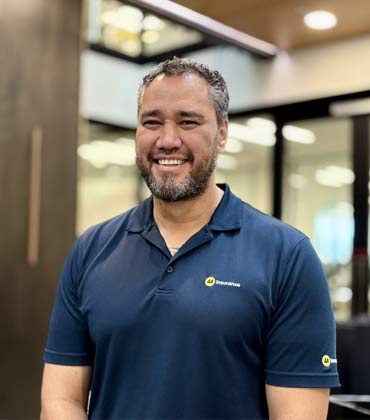
Beau Paparoa
As Head of Motor Claims at AA Insurance, Beau Paparoa leads a team dedicated to helping customers get back on the road following unexpected events. With more than 22 years of experience across claims and operational leadership, he is passionate about building strong partnerships, developing industry capability and ensuring customers benefit from the latest advances in vehicle repair and claims technology.
The Changing Nature of Motor Claims
After 22 years in insurance, I have seen enormous changes in how vehicles are designed, repaired and insured.
When I entered the industry, vehicles already involved complex repair work - but the technology was far more contained than it is now. Today's cars combine driver assistance systems (ADAS), sensors and cameras with software that reads the road and intervenes automatically, a capability that would have seemed futuristic not long ago.
Many assume the future of motor insurance is simply about keeping pace with all of this - I don't think it’s that simple. Our focus is on what we do best - looking after customers at claims time, while working alongside partners with the expertise to handle everything the technology now demands.
That points to three forces shaping motor claims: rapidly evolving technology and driver behaviour, increasingly specialised repair capability, and the partnerships needed to translate that change into better outcomes for customers.
Technology is changing the car faster than the driver
Vehicle technology is reshaping how cars are driven, assessed and repaired. At AA Insurance, that is happening alongside strong growth in our customer base - more customers, in more complex vehicles, means continually adapting our repair capability so we can focus on what we do best – supporting customers well at claims time.
Better technology can make vehicles safer, but reducing crashes depends on more than technology alone. Driver behaviour, trust and how safety features are used also matter. In our 2025 Lifestyle Survey, New Zealand drivers’ leading concerns included impaired motorists, oncoming driver error and speeding vehicles - reinforcing the importance of human behaviour.
Our claims teams also see how distraction, misjudgement and mental overload can contribute to incidents. Technology alone cannot eliminate those risks. The best outcome is not simply managing a claim well, central as that is to what we do, but helping customers avoid the incident in the first place. We regularly share what our claims data and customer research tell us - on everything from road rage to driver distraction - so motorists can better understand the everyday risks they face.
When it comes to adapting to new technology, prevention is only half the story. When an incident does occur, the industry must be ready to assess and repair increasingly sophisticated vehicles safely and efficiently, so drivers can get back on the road faster.
Increasingly specialised repair capability
Repairing a modern vehicle is not just a matter of more advanced technology. It is more complex work, requiring continuous training, specialist tools and access to correct manufacturer specifications. For independent repairers, that means keeping pace represents a significant investment.
AA Insurance’s recent Lifestyle Survey found that more than half of drivers would consider an EV within the next five years, while three in four would consider a hybrid. This points to an increasingly diverse vehicle fleet, with hybrids, EVs and a growing number of new international brands sitting alongside the petrol and diesel vehicles already on New Zealand’s roads.
When an incident does occur, the industry must be ready to assess and repair increasingly sophisticated vehicles safely and efficiently, so drivers can get back on the road faster.
The future is not about focusing on any one vehicle type, but ensuring your repair network has the skills, technology and capacity to support an increasingly varied fleet.
EVs show what this transition means in practice. The common assumption is that any knock to an EV means a write-off, and that battery damage makes repairs prohibitively expensive. Battery damage can be costly, but it is not the main pressure our repairers see. Most constraints today relate to parts availability, supply chains and access to manufacturer information - and I expect those to ease as the market matures.
This is why the industry has a role to play in explaining things clearly: how damage is assessed, what can be safely repaired, what must be replaced, and how customers will be supported after an incident.
Building that capability across a diverse repair network cannot happen in isolation - and it is not something we claim expertise in. Vehicle repair is a specialist trade and getting the best outcome for customers means insurers, specialist partners and independent repairers work together, each doing what they do best. It also means investing in the people coming through, which is why our Sponsored Apprentice Programme funds training, equipment and mentoring for young repairers.
Partnerships that deliver better customer outcomes
The equipment, training and manufacturer approvals needed to repair a modern vehicle are beyond what most independent workshops can fund on their own. If the network is going to keep pace, capability has to be shared rather than concentrated.
That is the thinking behind how we have approached partnerships. Fix Auto Collision New Zealand is the clearest example: it gives locally owned repairers access to operational support, technical knowledge, established systems and global supply arrangements, so they can build the capability and consistency that complex vehicles now demand. Rather than international expertise displacing local businesses, it strengthens them, which matters in a market the size of New Zealand's, where independent repairers carry out the majority of our work and are a significant part of how customers get back on the road.
Our relationships with Drive Group and Capital Smart add specialist capability and capacity alongside it, and the proof is in our reduced cycle times. Over the past year, average repair time from claim lodgement to completion through Drive Group fell by roughly 48% - a meaningful difference to someone waiting on their only car.
Capacity also matters when demand arrives all at once. After the Timaru hailstorm in November 2025, we brought in our Brisbane-based hail response team, who worked alongside local repairers using paintless dent repair to get vehicles back to customers before the holidays.
Partnership is not simply about outsourcing. It brings claims expertise, specialist capability and surge capacity together around the customer. Despite advances in technology, one thing has not changed in my 22 years in insurance.
Motor claims remain deeply personal. Vehicles will continue to evolve, and repair capabilities will become more specialised, but strong partnerships will determine how effectively those changes reach customers. Through it all, trust and personal connection will remain at the heart of every successful claim.
The articles from these contributors are based on their personal expertise and viewpoints, and do not necessarily reflect the opinions of their employers or affiliated organizations.
